Louise.
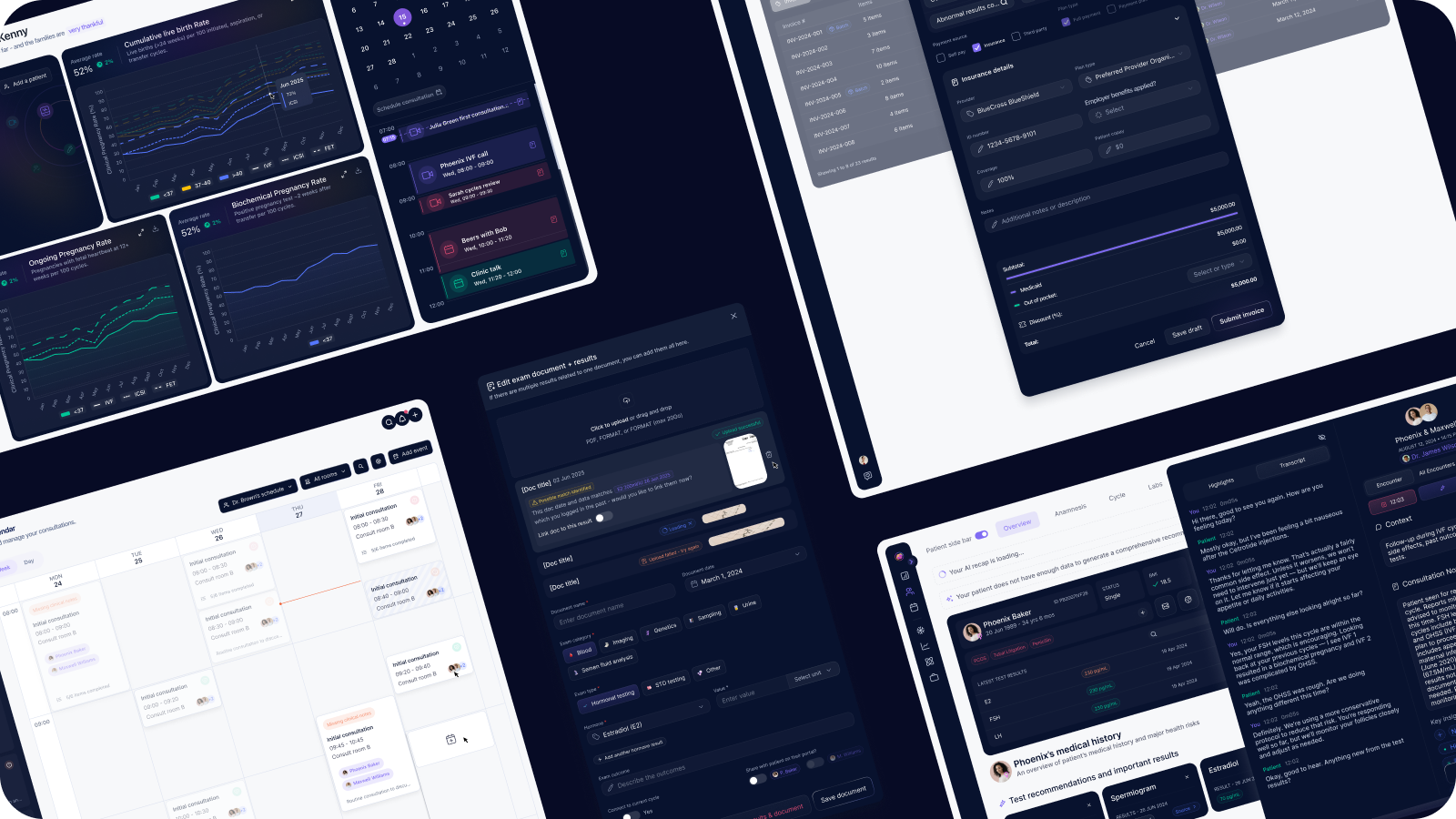
Designing clarity in an AI-first healthcare product. Two years structuring clinical, operational, and biological systems into a scalable platform where complexity had to stay navigable and reliable.
Context
Louise is a platform used by fertility clinics to manage patients, IVF treatments, lab operations, and billing workflows.
The product operates in a highly interconnected environment: clinical decisions, biological processes, and financial operations all depend on one another and evolve in real time. As the platform scaled, complexity grew across every layer. The goal was not to remove that complexity but to structure it so it stayed usable, consistent, and reliable.
Over two years, I shipped more than 20 features across the platform, from small refinements to major new systems. The team grew to around 10 to 15 people at its peak, and the product moved fast throughout.
The challenge
The core issue was fragmentation. Three critical layers of clinic operations existed independently, but not as a cohesive system.
{{ c.title }}
{{ c.text }}
My approach
I worked as one of two Product Designers across the full platform, leading UX, system design, and interface design from discovery to delivery. Validation happened continuously: two in-house clinical experts, themselves in direct contact with IVF labs worldwide, were involved throughout. Features were regularly demoed to those labs, and their feedback directly shaped what we built and iterated on next.
{{ a.title }}
{{ a.text }}
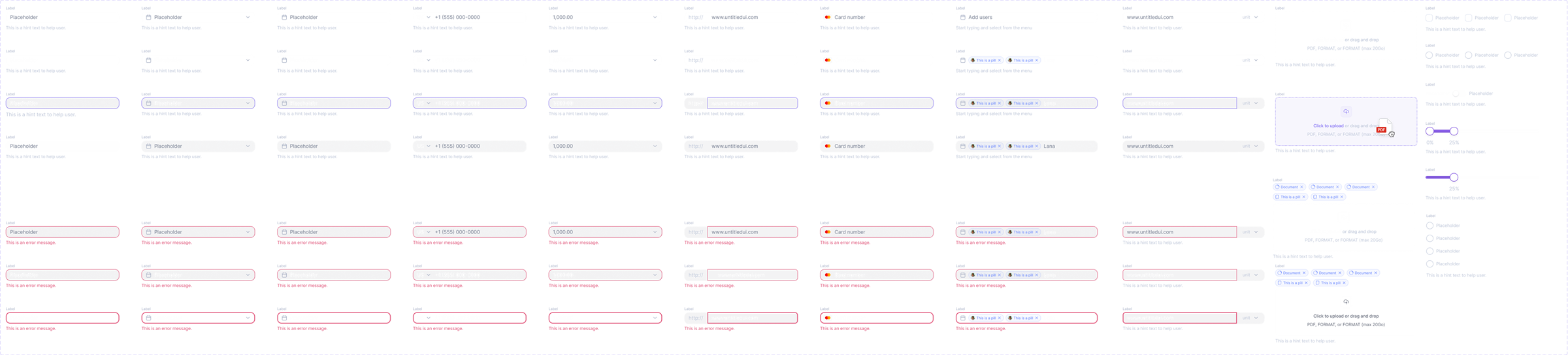
Key product systems
The product is structured around three core systems, each addressing one of the fragmented layers.
Encounters
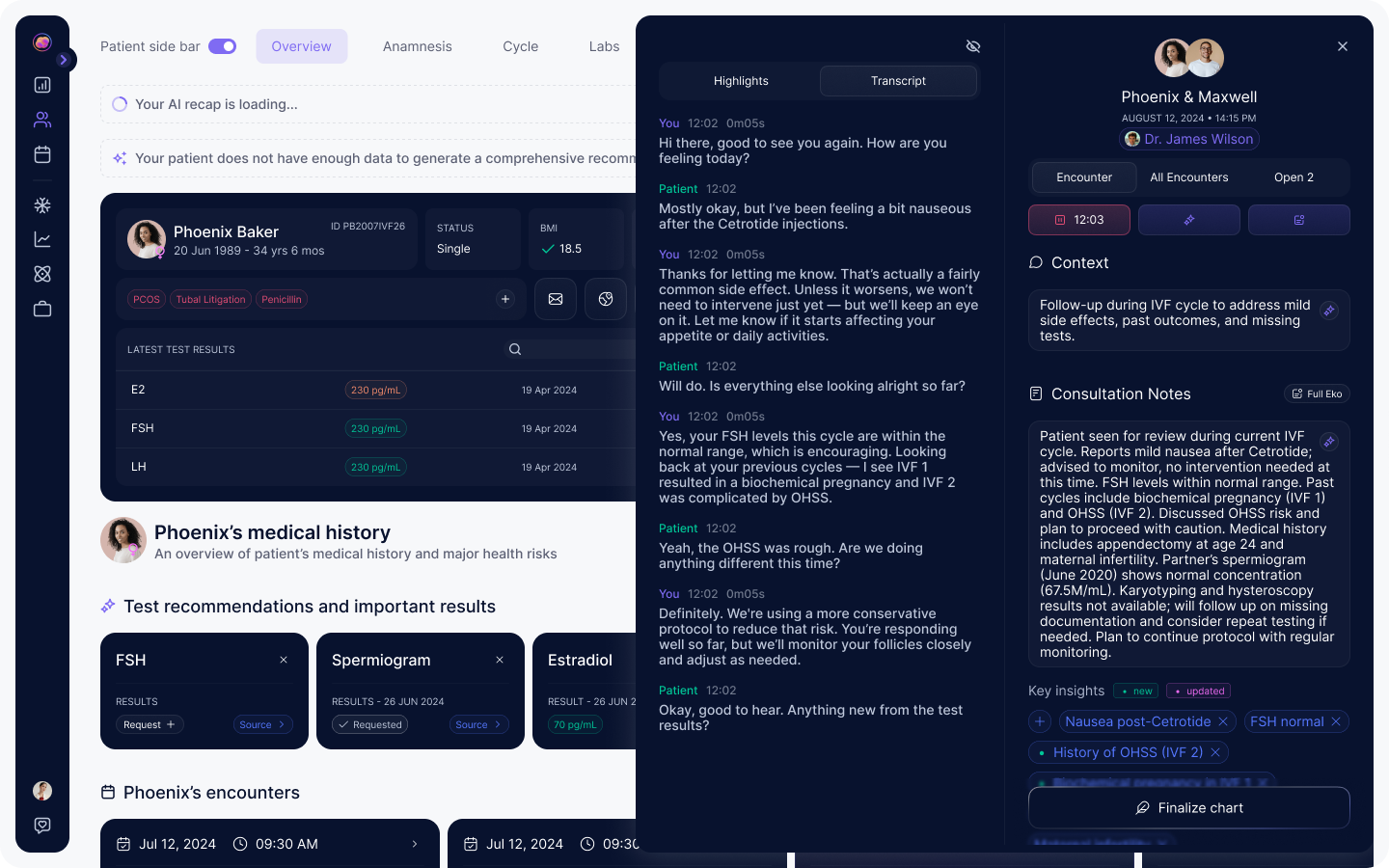
Clinical information was scattered across notes, lab results, history, and treatment context. Reconstructing a patient's situation in real time was harder than it needed to be.
I structured encounters into a single vertical flow: context leads into insights, then next steps, then operational outputs like prescriptions or billing actions. A persistent right-side panel keeps cycle status, alerts, and ongoing treatments visible throughout.

🔍 Click any image to zoom
Billing
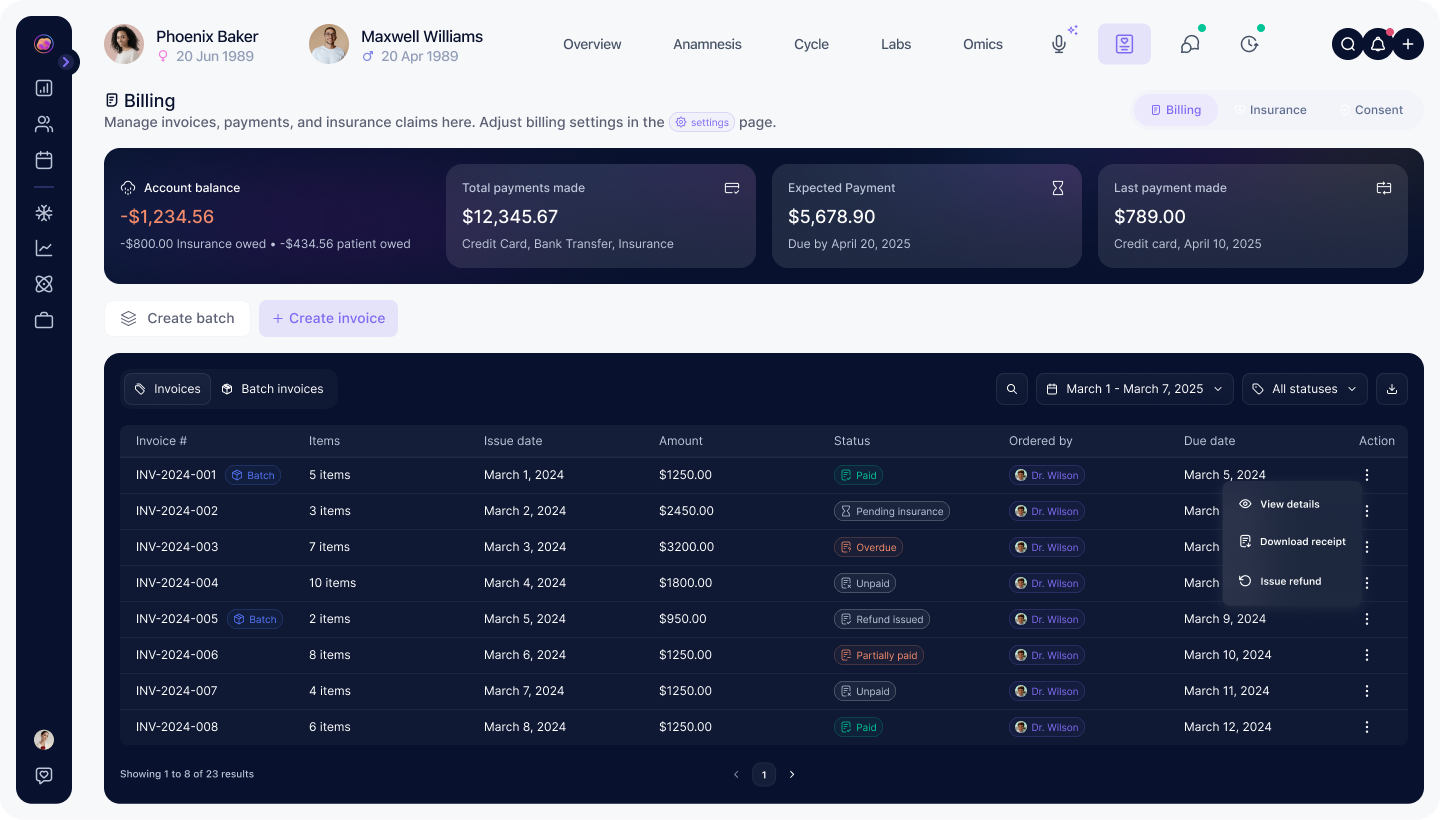
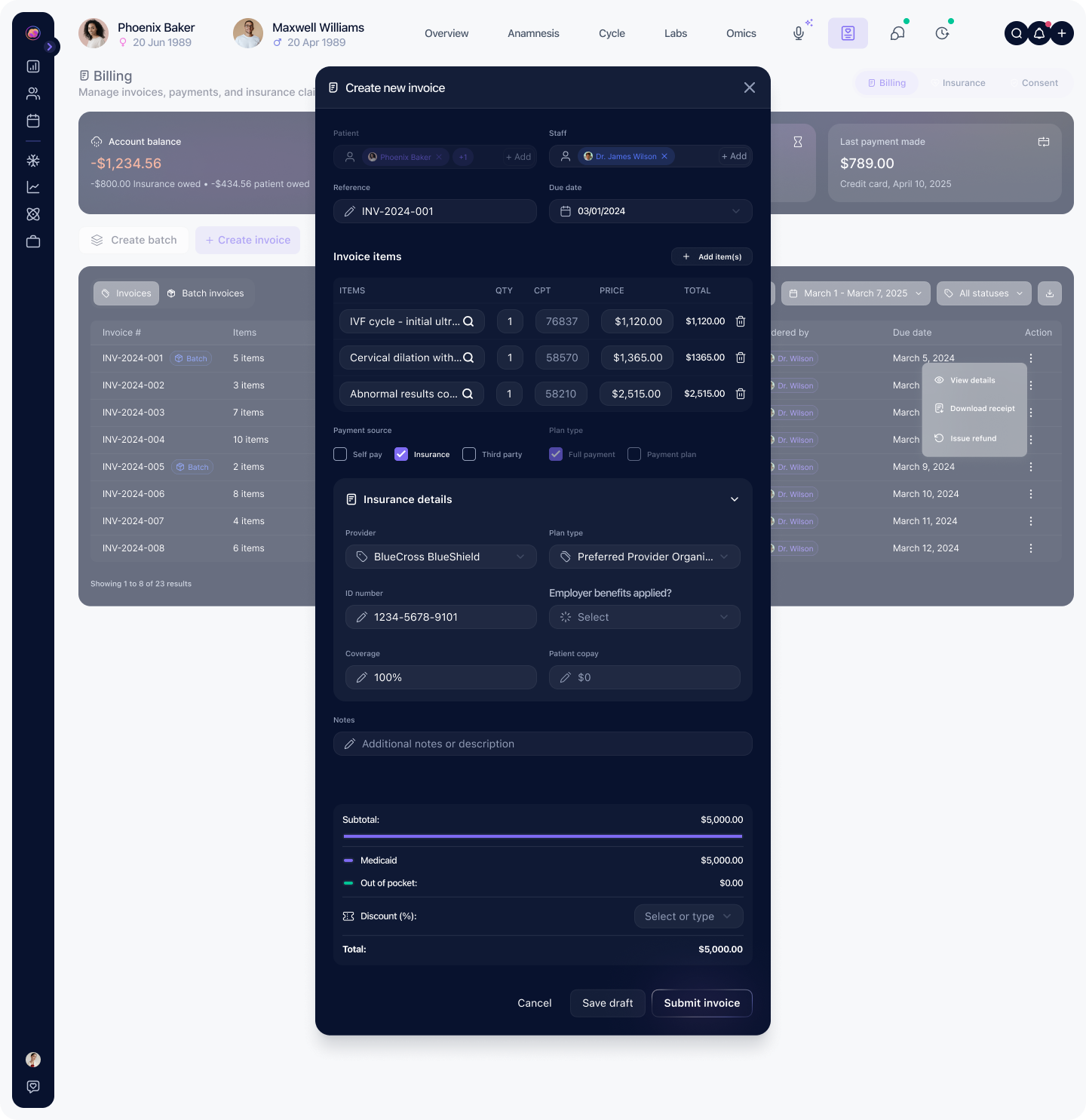
Billing was fragmented across invoices, insurance responses, and third-party financing providers. Clinic staff had no single place to understand where a patient stood financially.
I redesigned billing into a unified operational dashboard where revenue, outstanding payments, and insurance status are the primary decision signals, reducing manual reconciliation and giving the team a clearer view across financial operations.
IVF cycles & embryology
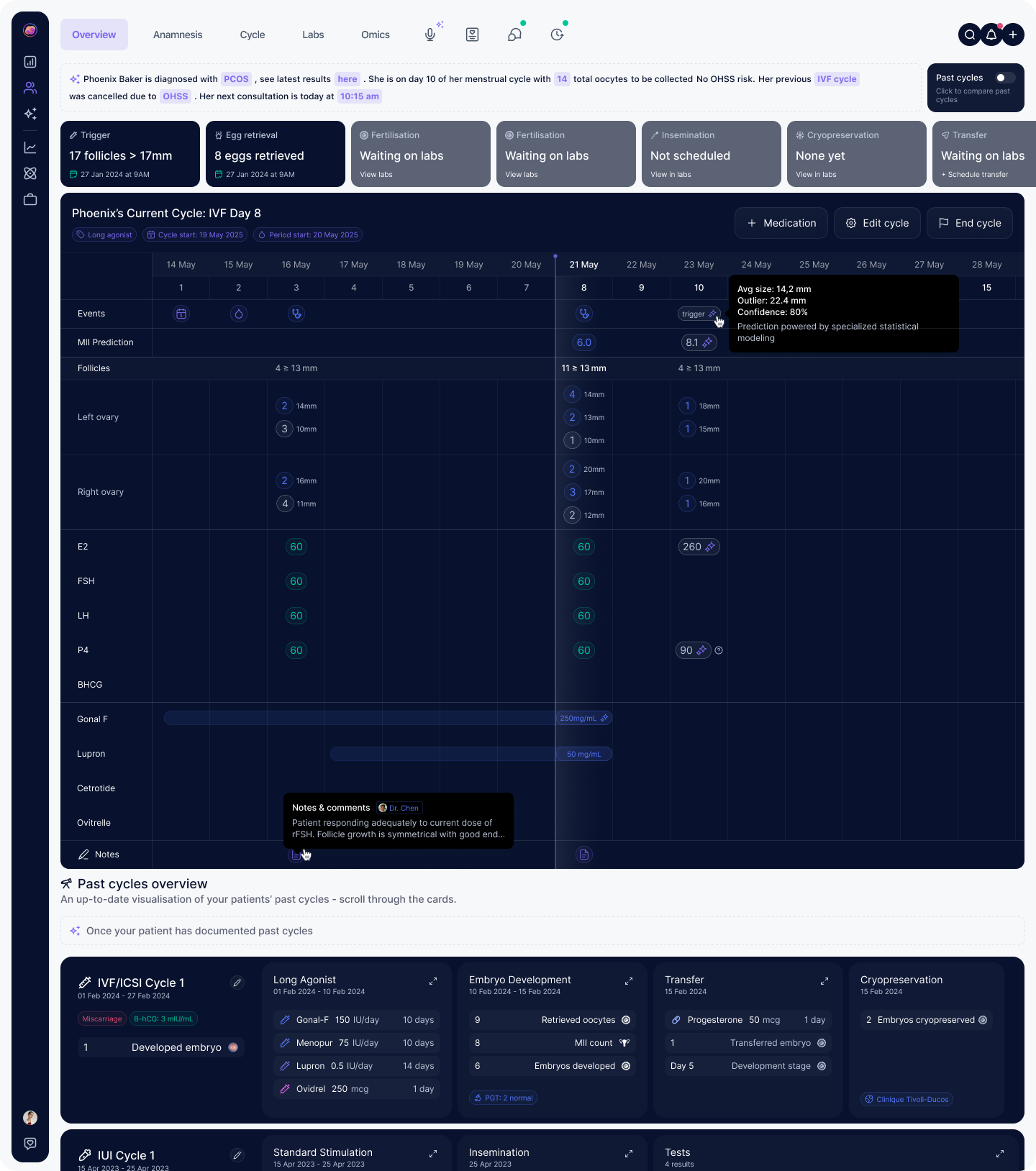
IVF involves managing complex biological processes simultaneously: stimulation, retrieval, fertilisation, embryo development, grading, biopsy, and cryopreservation. Each stage progresses independently while staying part of one interconnected system.
I structured this into a lifecycle model with two views. A timeline shows cycle progression over time. An entity view tracks individual embryos with their status, grading, and history, letting clinicians and lab teams move between the big picture and granular detail as needed.
One specific feature that came directly from lab requests was the follicle tracking input, where clinicians can log the number and size of follicles during monitoring. This process was previously done on paper and disconnected from the rest of the cycle view. Labs responded well to seeing it integrated.
Outcomes
{{ o.title }}
{{ o.text }}
Final reflection
Louise is a product where design cannot be separated from the operational complexity it supports. The challenge was never to simplify medical workflows. It was to make them navigable, reliable, and scalable inside a system that keeps growing.
Using Lovable, Aura, and Claude Code changed the pace and nature of the work. Flows got explored and challenged faster, prototypes were testable earlier, and front-end implementation happened directly. The main limitation was UI consistency, which a strong Figma design system handles better. The two approaches complemented each other more than they competed.
If I were starting Louise again from scratch, I would incorporate AI tooling sooner. There was a period of working the traditional way that, in hindsight, could have moved faster without losing quality.
More broadly, this project reflects a shift in how I work: from designing individual screens to designing end-to-end systems where every decision is embedded in a real operational chain.